1.3 The applied project cycle
A practical project cycle contains six connected activities:
- Frame: Understand the organization, decision, audience, constraints, and intended use.
- Plan: Define deliverables, responsibilities, milestones, dependencies, risks, and review points.
- Understand: Document the data, assess quality, investigate context, and conduct exploratory analysis.
- Analyze: Select, evaluate, and compare methods that answer the analytical questions.
- Interpret: Connect results to context, assumptions, limitations, and practical consequences.
- Communicate: Build a coherent report, presentation, implementation plan, and final handoff.
The stages are connected rather than strictly sequential. Exploratory analysis may reveal that the original question cannot be answered. A model may expose a data-quality problem. Secondary research may show that an important category definition has changed. Feedback may require a different comparison or projection. Returning to an earlier stage is responsible when the reason and resulting decision are documented.
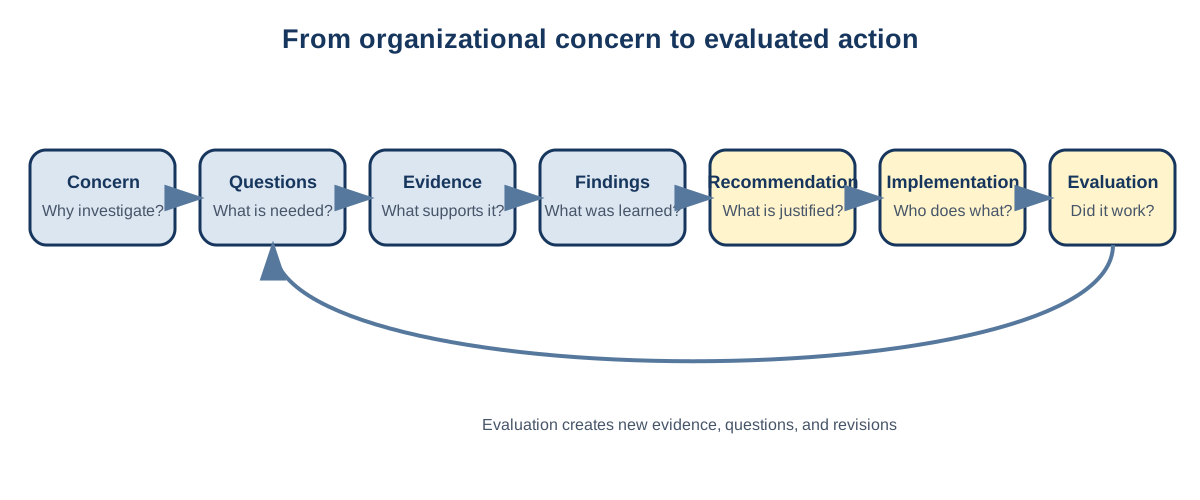
A complete project connects the organizational concern to evidence, action, and evaluation.